

Mindsets are the beliefs or “attitudes that governs one’s actions, behaviours, and thoughts” and “shapes how individuals interact with the world around them” (Cooley & Larson, 2018).
Mindsets play a critical role in how we perceive and respond to challenges, learning experiences, and opportunities, as well as impact our wellbeing.
Carol Dweck, a leading researcher on how mindsets affect learning and an individual’s beliefs about intelligence, identified that many us, including educators and students, have either a fixed or growth mindset. “We all fall into patterns of fixed and growth mindsets throughout our lives” (Waggoner, 2026).
Carol Dweck and colleagues developed the Growth mindset theory which suggest that a person with a fixed mindset “believes that “their intelligence is a fixed, immutable trait” (Stanford University, n.d.) meaning it cannot be changed or improved on. This theory also suggests that a person with a growth mindset believes “that their intelligence can expand and develop” (Stanford University, n.d.) through effort, perseverance, and from learning setbacks or failures.
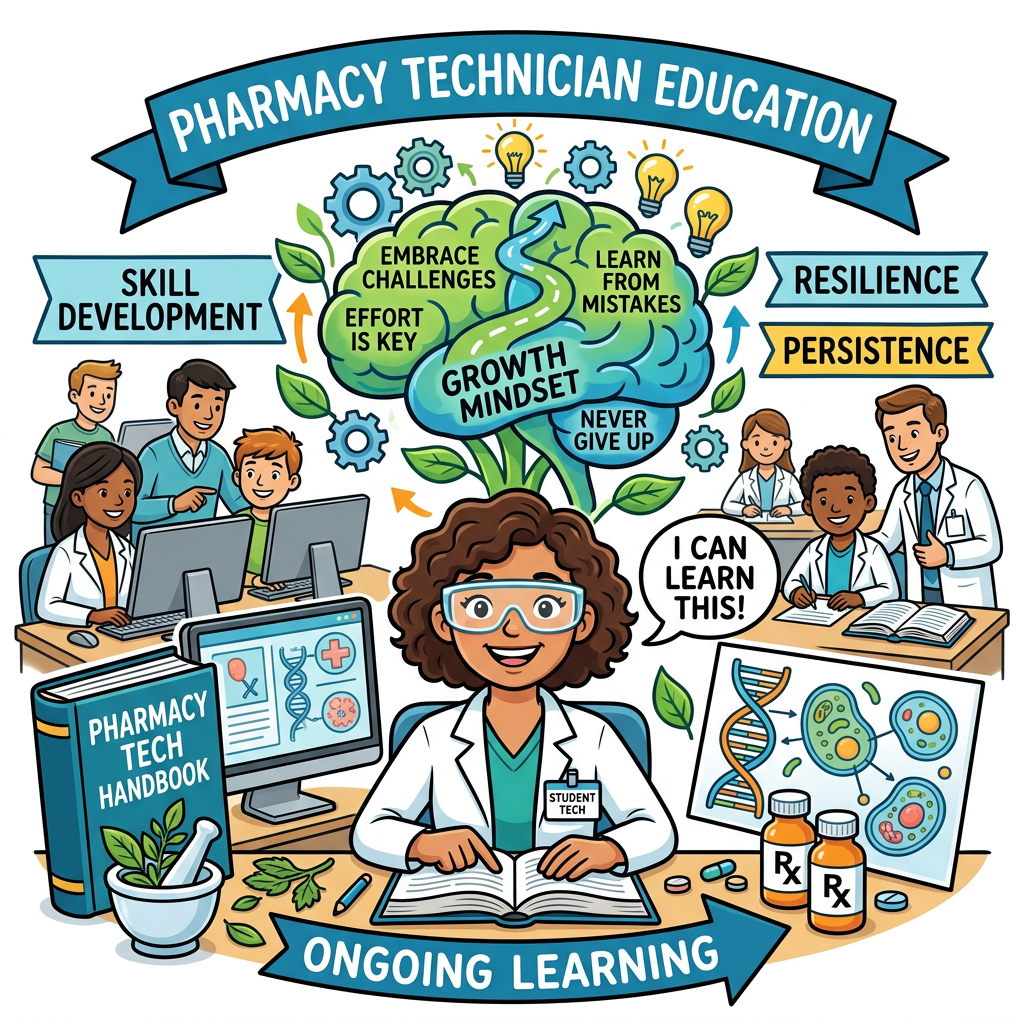
Pharmacy practice and health care systems, including pharmacy technician’s scope of practice are constantly changing and evolving, therefore, it is important that pharmacy technician students develop resiliency and a growth mindset.
The good news is that your mindset isn’t fixed, it can grow and change with practice, persistence, and effort. “Mindsets are just beliefs. They’re powerful beliefs, but they’re just something in your mind, and you can change your mind” (Dweck, 2016).
To understand how this happens, let’s explore neuroplasticity.
What is Neuroplasticity
Neuroplasticity is “the neural networks’ ability to change and reorganize in the brain through learning and experience” (LeBlanc, Martens, & Orlowski, n.d.). It allows our brain to grow and change. Learning allows us to change our brains and create new hardwired connections and is the foundation of growth mindset.
Watch the following videos below to learn more about neuroplasticity and the neuroscience of learning.
Fixed Mindset vs Growth Mindset
“Individuals with fixed mindset tend to believe that the amount of talent, basic abilities, and intelligence are fixed when they are born.
Individuals with a growth mindset tend to believe that practice effort, and perseverance will lead to improvement in performance” (Wong, 2025)
Table 1: Comparison of Common Traits for individuals with growth and fixed mindsets (Cooley & Larson, 2018).
| Trait | Growth Mindset | Fixed Mindset |
| Attitudes about learning | Pursue challenges Value effort Believe that mistakes and effort are critical to learning | Feel “smart” when education comes easily Avoid looking foolish or unlearned Worry about making mistakes Will sacrifice learning if it risks showing deficiencies |
| Responding to feedback | Eagerly sek out formative feedback Quickly implement feedback received | Become discouraged and defensive about constructive feedback More likely to cheat and lie about grades and performance |
| Responding to setbacks | Demonstrate resilience to setbacks Believe setbacks are part of the learning process Employ adaptive studying methods Adapt to increasing challenges | Give up easily Believe setbacks are indictments of self Assume that setbacks signal low ability and low intelligence Make excuses and blame others Avoid similar courses/situations in the future. |
Take this short mindset assessment What is My Mindset? to identify areas where you can work toward a growth mindset.
As a learner, you have the ability to shift from a fixed mindset to a growth mindset in all areas of your life – personal, professional, and school. When you understand your mindset, you can begin to change how you approach learning, challenges, and uncertainty.
Watch the video below to learn more about growth mindset vs fixed mindset
Fixed mindset vs growth mindset in pharmacy practice
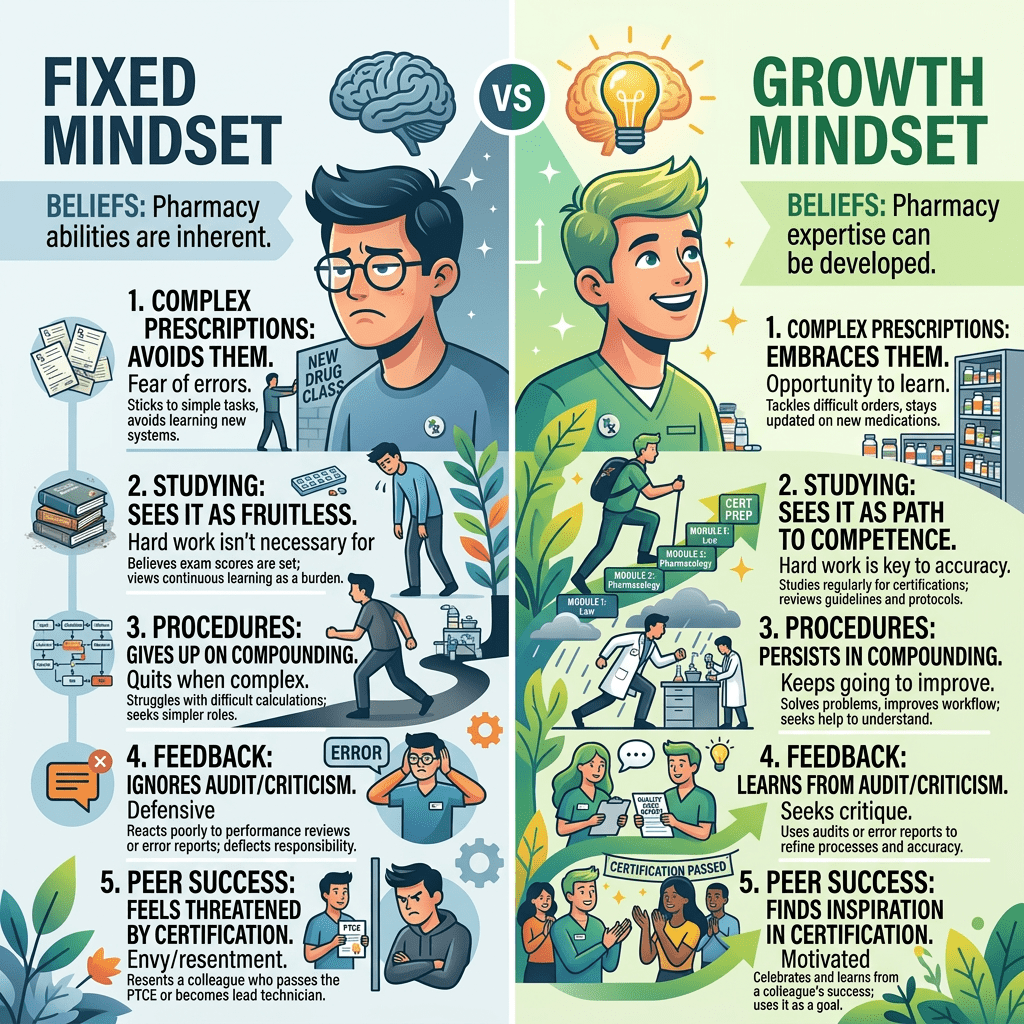
Why Mindset Matters in Pharmacy
In pharmacy education, accuracy, safety, and attention to detail are critical. Errors do happen in pharmacy practice, and therefore, healthcare students and professionals, such as pharmacy technicians, need to develop strategies to understand medical errors and mistakes, and methods to learn from these errors. Klein et al. (as cited in Cooley & Larson, 2018) points out “health professional students need strategies to help build resilience as they learn from mistakes, encounter challenges, and begin the face the reality of medical errors in their practice setting.” By adopting a growth mindset, you are able to understand “that errors can be a powerful tool for learning and growing, often highlighting flaws in systems and processes, when the error is appropriately analyzed and addressed” (Cooley & Larson, 2018).
Pharmacy technicians are licensed healthcare professionals that need to continually self-reflect and assess their current knowledge and skills, as well as gaps and deficits. As a licensed professional or registrant, you are required to complete yearly continuing education requirements to improve your professional practice.
NAPRA’s Professional Competencies for Pharmacists and Pharmacy Technicians at Entry to Practice in Canada (2024) highlight competencies that pharmacy professionals must uphold.
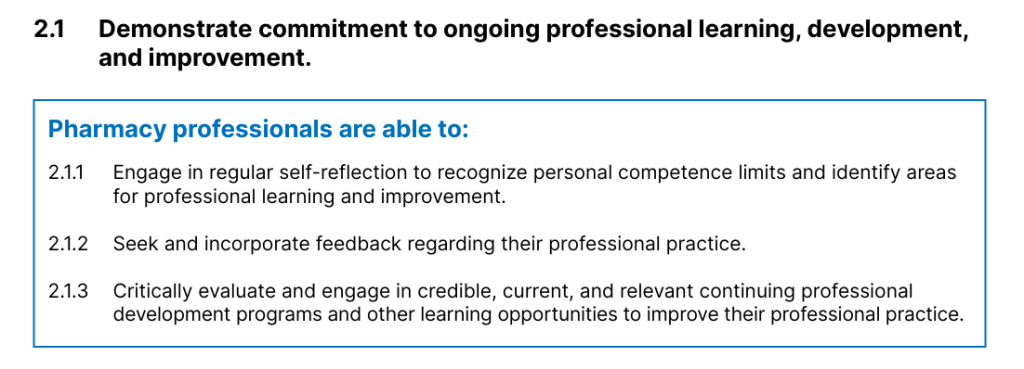
NAPRA’s Principles of Professionalism for the Profession of Pharmacy (2022) principle #8 states “The profession of pharmacy is conscientious in fulfilling duties to the best of its collective abilities” and includes the following behaviours.
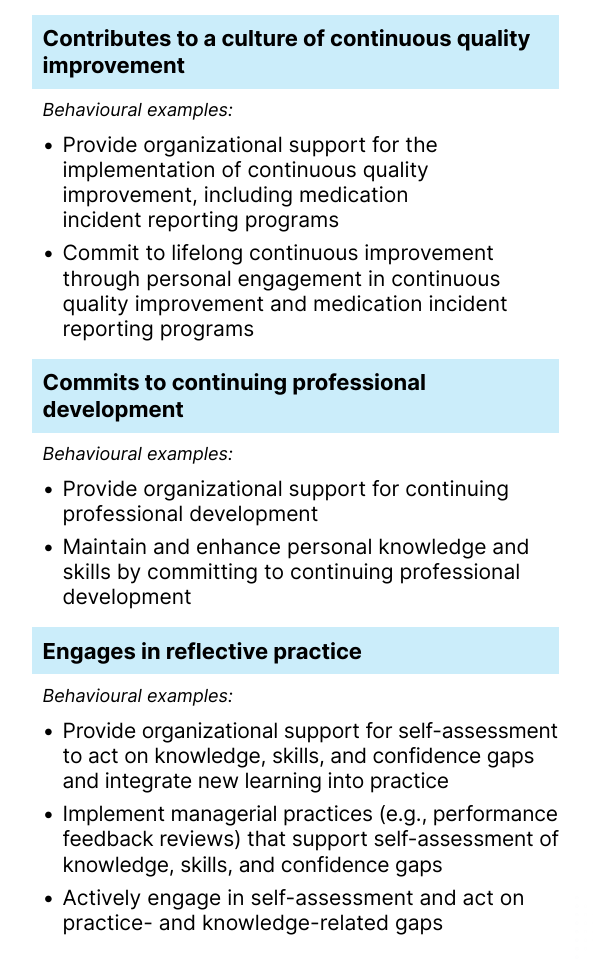
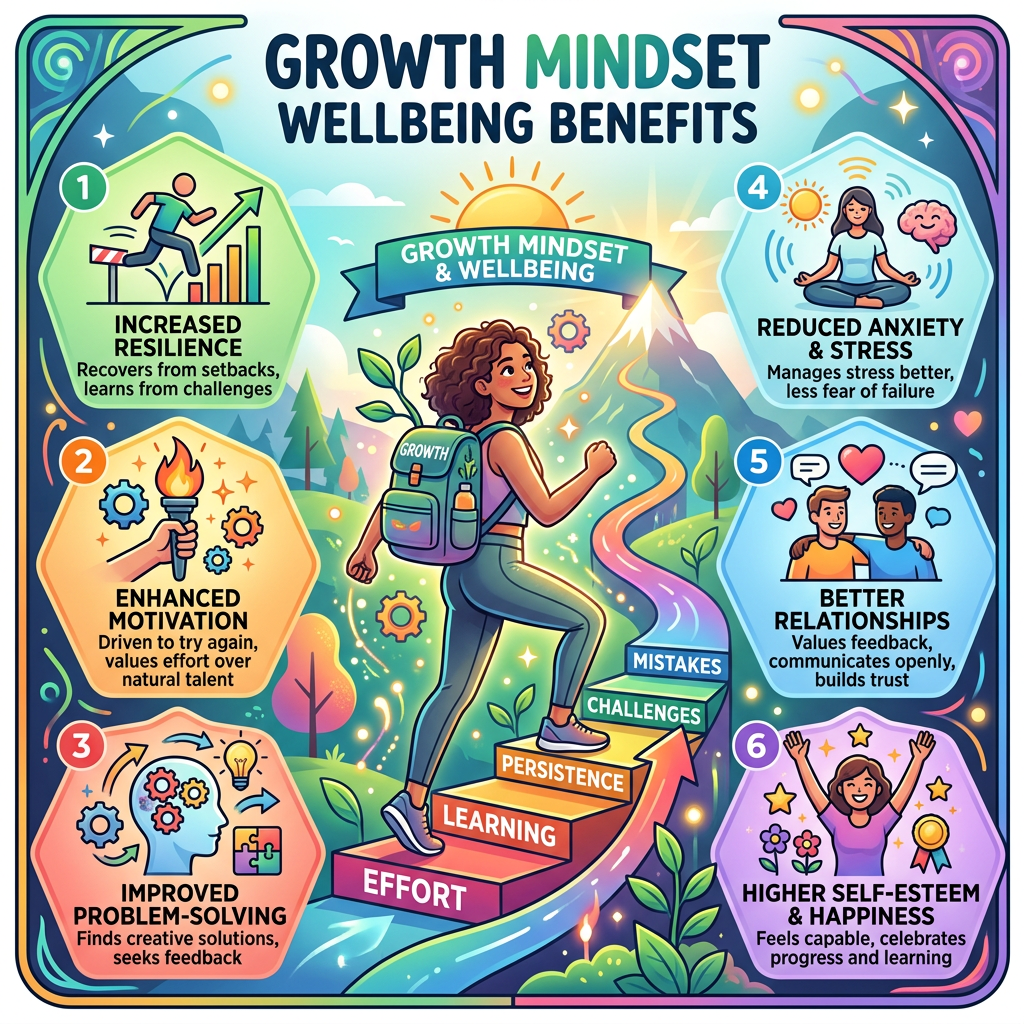
Developing a growth mindset supports your wellbeing. “Fostering a growth mindset…can assist in the development of health coping mechanisms that will carry through one’s career, and will aid in dealing with setbacks, failures, rejections, and errors of judgment”(Cooley & Larson, 2018).
Developing a Growth Mindset
When I first started out as a hospital pharmacy technician, I really struggled with deciphering prescriber handwriting and entering medication orders into a patient’s profile. I would come home crying and telling my husband “I am never going to be able to do this.” I did not give up though. I practiced this skill by having the pharmacist send back orders after orders, through perseverance, determination, and a little bit of stubbornness, listening to constructive feedback, and self-reflection. Overtime I grew in my ability to accurately enter medication orders into a patient’s profile. In fact, it is one of the roles I really enjoy because it constantly challenges me and it allowed me to develop a growth mindset.
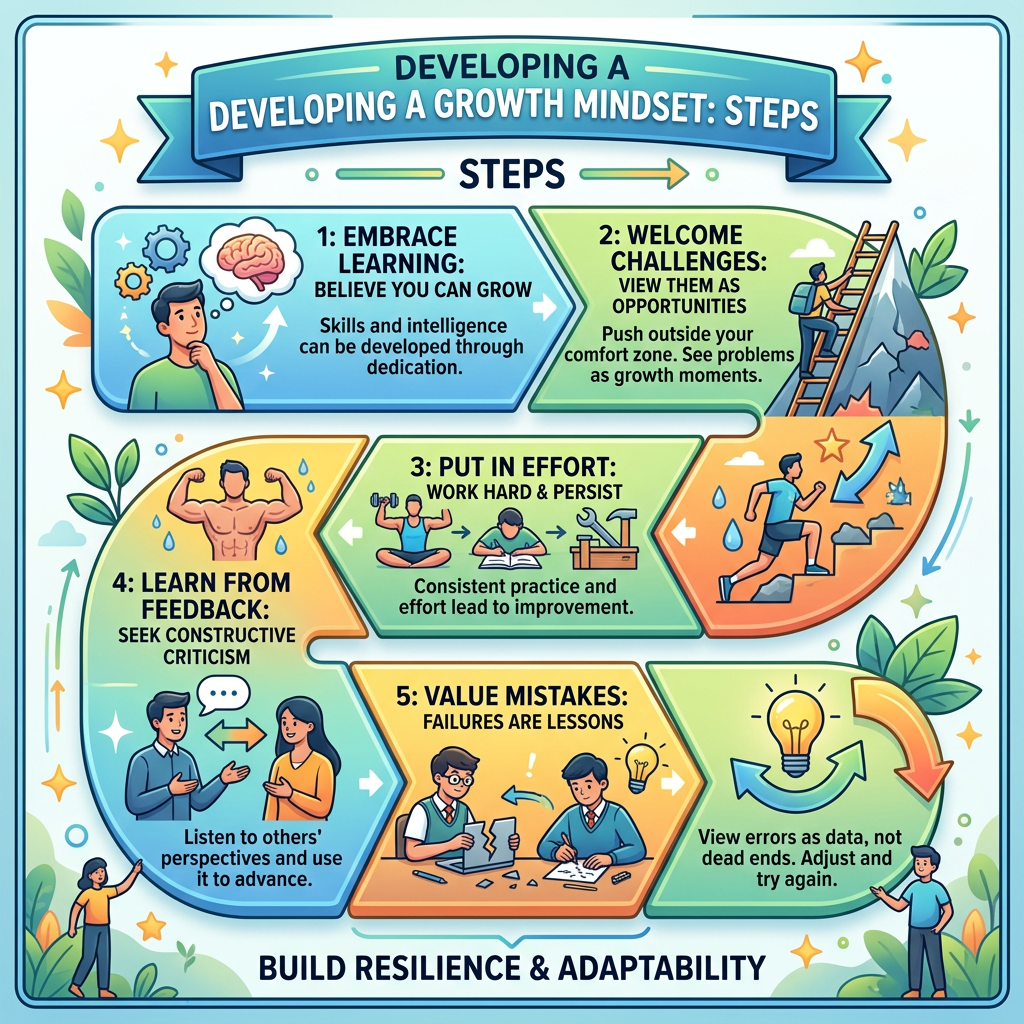
Steps you can take to develop a growth mindset:
- Cultivate self-awareness
- Perform a mindset audit
- Practice self-talk that reinforces resilience
- Flip your thinking
- Accept failure as part of your growth
- Challenge yourself with new experiences
- Accept and encourage feedback
- Embrace the power of yet
- Reflect on past successes where effort led to improvement
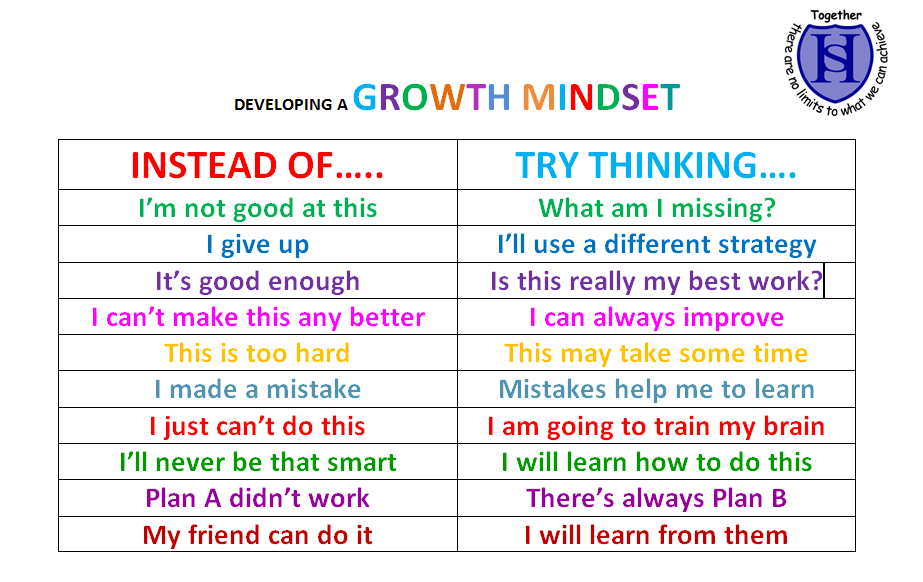
Sometimes knowing how to reframe your words can make all the difference. By shifting your language from “I can’t” to “I can learn,” you can develop a growth mindset that supports resilience, builds confidence, and helps you embrace challenges as opportunities to grow.
Growth mindset can develop a passion for learning, and allows intelligence and creativity to be cultivated and deepened. “Why waste time proving over and over how great you are when, you could be getting better? Why look for friends or partners who will just shore up your self-esteem instead of ones who will also challenge you to grow? And why seek out the tried and true, instead of experiences that will stretch you? The passion for stretching yourself and sticking to it, even (or especially) when it’s not going well, is the hallmark of the growth mindset. This is the mindset that allows people to thrive during some of the most challenging times in their lives…” (Dweck, as cited in ExploreLearning’s Embrace the Challenge: Growing the Growth Mindset, 2017)
Building a Growth Mindset in Pharmacy Technician Education © 2026 by Kathleen Young is licensed under CC BY-SA 4.0
References:
Cooley, J. & Larson, S. (2018). Promoting a growth mindset in pharmacy educators and students. Currents in Pharmacy Teaching and Learning, 10(2018), 675-679. https://doi.org/10.1016/j.cptl2018/03.021
Dweck, C. (2016). Mindset: The New Psychology of Success. Ballentine Books.
ExploreLearning. (2017). Embrace the Challenge: Growing the Growth Mindset. https://www.explorelearning.com/user_area/uploads/embrace-the-challenge-growing-the-growth-mindset.pdf
LeBlanc, D., Martens, A., & Orlowski, L. (n.d.) Utilizing Neuroscience Principles in Education. BCCampus Pressbooks. https://pressbooks.bccampus.ca/etec512neuroscience/
Li, R. (2018, April 24). How to Develop the Growth Mindset. Medium https://medium.com/@veraliruiyu/how-to-develop-the-growth-mindset-8de56f47384d
National Association of Pharmacy Regulatory Authorities (2024). Professional Competencies for Pharmacists and Pharmacy Technicians at Entry to Practice in Canada. https://www.napra.ca/publication/professional-competencies-for-pharmacists-and-pharmacy-technicians-at-entry-to-practice-in-canada/
National Association of Pharmacy Regulatory Authorities (2022). Principles of Professionalism for the Profession of Pharmacy. https://www.napra.ca/publication/principles-of-professionalism-for-the-profession-of-pharmacy/
Teaching Commons (n.d.). Growth Mindset and Enhance Learning. Stanford University. https://teachingcommons.stanford.edu/teaching-guides/foundations-course-design/learning-activities/growth-mindset-and-enhanced-learning
Waggoner, E. (2026). How a Growth Mindset in 2026 Can Help You Succeed in College. University of Colorado Denver. https://www.ucdenver.edu/student/stories/library/lynx-tales/how-a-growth-mindset-in-2026-can-help-you-succeed-in-college#:~:text=One%20of%20the%20leading%20researchers,to%20being%20successful%20in%20college.
Wong, A. (2025). Explore mindsets and describe teaching behaviours of pharmacy faculty. University of North Carolina at Chapel Hill. https://cdr.lib.unc.edu/concern/honors_theses/2b88qn82q

