

Constructing Knowledge and Meaning From Experience
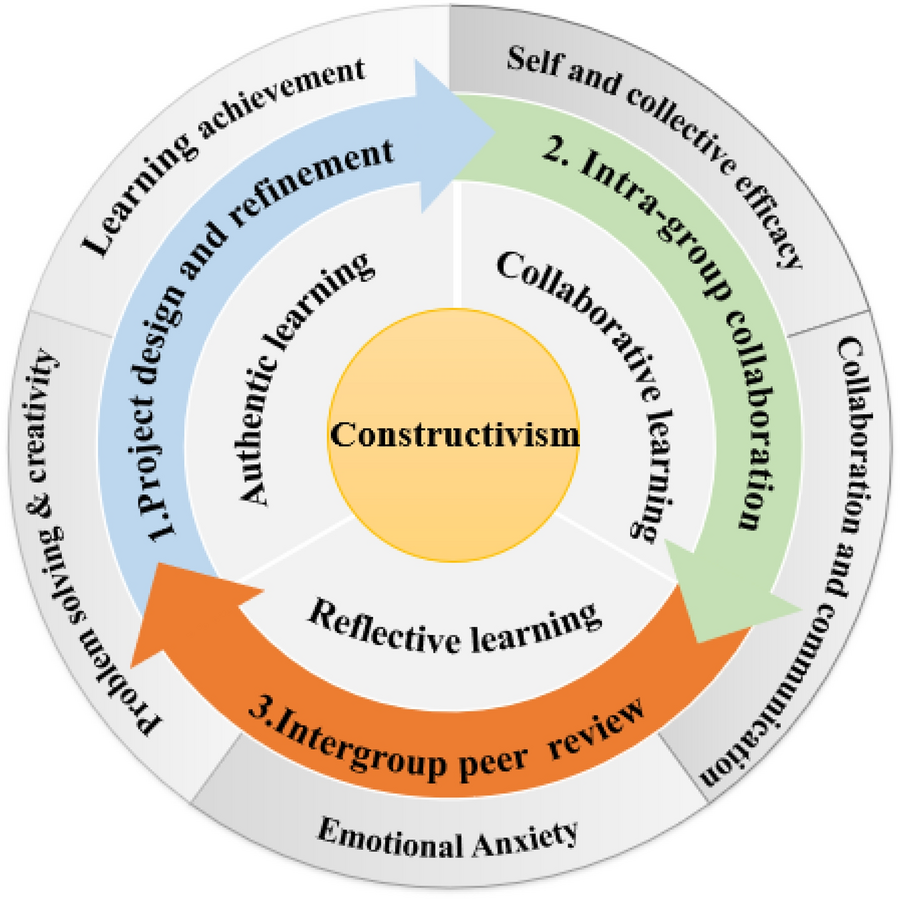
Constructivism is a learning theory that emphasizes that leaners play an active role in constructing their knowledge, constructing meaning from experience, as well as creating understanding of their reality through experience and interactions, and reflecting on their experiences.
In the article, Constructivism Learning Theory & Philosophy of Education by Saul McLeod, the author discusses constructivism philosophy, types of constructivism (social constructivism, cognitive constructivism, and radical constructivism, constructivism teaching philosophy, and critical evaluation of this learning theory.
Constructivist Theorists
Key theorists for this learning theory include Jean Piaget, Lev Vygotsky, and John Dewey.
Jean Piaget (1896 – 1980): Cognitive Constructivism
Jean Piaget was a Swiss biologist and psychologist and is considered the founder of constructivism. His theory of cognitive development indicated that “humans create knowledge through interaction between their experiences and ideas” (Brau, 2020), which occurs through three learning processes: assimilation (integration of new concepts into our pre-exiting schema), accommodation (adapting new concepts into our schema that conflict with our pre-existing knowledge, and equilibration (“maintaining the status quo between new and existing ideas” [Chand, 2024]).
Lev Vygotsky (1896-1934): Social Constructivism
Lev Vygotsky was a seminal Russian psychologist who developed the sociocultural theory. He argued that people constructed meaning from experience through social interactions and integration into knowledge communities. Cultural development occurs on a social level between people (interpsychological) and then within a person (intraspychological). He also emphasized that intellectual development and understanding of reality are derived from language and culture.
Vygotsky believed that learning occurred at two developmental levels: the level of actual development (what the learner can already do) and the level of potential development, also known as the Zone of Proximal Development, (what the learner is capable of doing through the help of a More Knowledgeable Other). Through collaborative learning and interaction with MKOs (e.g., instructor, coach, peer), a learner is able to develop higher order mental functions.
John Dewey (1859 – 1952):
Transactional Constructivism
John Dewey was an American psychologist, philosopher, and educational reformer. His educational philosophy combined aspects of cognitive constructivism with social constructivism. He believed learning occurred between an individual and society, and the role culture played in order for students to reach high-order mental function.
Dewey also explained that engaging learners in experiential learning activities allowed students “to demonstrate higher levels of knowledge through creativity and collaboration” (Behling & Hart, as cited in Brau, 2020). Dewey valued experiential learning because it required students to be active learners, and through reflection of their learning they were able to adapt, revise, or construct new meaning on previous habits. “Thus experience then, is the basis for “genuine education” (Merriam & Bierema, 2014).
Constructivist Classroom
A constructivist classroom involves a unique learning environment which consists of collaboration and students actively participating in their learning.
Teachers act as facilitators and guide students by incorporating new knowledge “within the pre-existing knowledge of students” (Main, 2021).
Traditional Classroom vs Constructivist Classroom

Image from Embracing the Learning Theory: Constructivism by Paul Main, 2021
Constructivist teaching components include:
- Elicit prior knowledge
- Create cognitive dissonance
- Apply knowledge with feedback
- Reflect on Learning
Examples of Constructivist Learning Activities include:
- Reciprocal teaching and learning
- Inquiry-based learning
- Problem-based learning
- Cooperative learning
(University of Buffalo, Office of Curriculum Assessment and Teaching Transformation, 2024).
Constructivism and Constructivism Methods vs Other Learning Theories and Methods

Image from Embracing the Learning Theory: Constructivism by Paul Main, 2021
Critical Review of Constructivism
The main criticism of this learning theory is the lack of structure, and it removes the traditional way of grading because it focuses on students’ self-evaluating their process.
References:
Brau, B. (2020). Constructivism. The Students’ Guide to Learning Design and Research. EdTech Books. https://edtechbooks.org/studentguide/constructivism
Chand, S. (2024). Constructivism in Education: Exploring the Contributions of Piaget, Vygotsky, and Bruner. International Journal of Science and Research, 12 (7), 274-278. https://www.researchgate.net/publication/ 378071316_Constructivism_in_Education_Exploring_the_Contributions_of_Piaget_Vygotsky_and_ Bruner
Main, P. (2021). Embracing the Learning Theory: Constructivism. Structural Learning. https://www.structural-learning.com/post/embracing-the-learning-theory-constructivism
Merriam, S. & Bierema, L. (2014).Adult Learning Linking Theory and Practice.
Jossey-Bass.
Office of Curriculum Assessment and Teaching Transformation. (2024). Constructivism. University of Buffalo. https://www.buffalo.edu/catt/teach/develop/theory/constructivism.html
Thompson, M. (2019) Education Reimagined Through Constructivism. TedRx. Bethany Global University. https://www.youtube.com/watch?v=XVMyHt5ULUA
Wang, X., Yu, X., Hwang, G. et al. (2023). An online progressive peer assessment approach to project-based learning: a constructivist perspective. https://link.springer.com/article/10.1007/s11423-023-10257-6
Subscribe
Enter your email below to receive updates.
 thepharmtechinstructor.blog
Leave a comment